
FOUND THE LAND YOU LOVE? WHAT TO CHECK BEFORE YOU BUY

Finding land can feel a little like riding on a magic carpet — full of possibility. But what happens when you think you've finally found the one?
Finding a piece of land you love is exciting. It might be the view, the privacy, the space around you or simply the feeling that you could see yourself living there.
But before you commit to buying, there is another important question to ask:
Is this land right for the home you actually want to build?
A section can look perfect at first glance, but its contours, ground conditions, access, services, easements, covenants and planning requirements can all influence what can be built and how the home should be designed.
Understanding those things before you buy can give you a much clearer picture of the opportunity in front of you.
What should you check before buying land to build on?
Before buying land for a new home, it is worth understanding the site conditions, contours, orientation, access, available services, easements, covenants and any planning or development restrictions that could affect the build.
The most important question isn't simply whether you can build on the land, but whether the site can comfortably accommodate the type of home and lifestyle you have in mind.
Having a builder and designer look at the site early can help identify potential challenges, uncover design opportunities and give you a better understanding of the land before you make your decision.
Start with what you want from the land
Before looking at what can be built, think about why you were drawn to the property in the first place.
Perhaps you want privacy and space around you. You may want a home positioned towards a particular view, room for a pool, a large outdoor entertaining area, additional garaging or space for children to enjoy the outdoors.
For some families, the land may eventually need to accommodate changing family needs or multigenerational living. For others, the priority might be creating a quiet rural retreat that makes the most of its surroundings.
These things matter because they influence where the home should sit, how it should be orientated and how much of the site needs to remain available for outdoor living, access and other features.
The right piece of land isn't necessarily the largest or the flattest. It's the one that can support the way you want to live.
Understand the contours and ground conditions
What appears to be a relatively straightforward site can become quite different once you understand its levels and what's happening below the surface.
Sloping land can create wonderful architectural opportunities, including elevated views, stepped floor levels and stronger connections with the landscape. But it can also influence foundations, retaining, earthworks, drainage and access.
Ground conditions matter too. Geotechnical information can help identify characteristics of the site that may influence foundation design and other construction decisions.
Sloping and more complex sites can create interesting architectural opportunities, but they need to be understood from the beginning. When the design responds to the contours and ground conditions, these characteristics can help shape the architecture rather than becoming something to resolve later.

A Maddren Homes project taking shape on a sloping Weiti Bay site, where the building platform, retaining and coastal outlook were considered together from the early design stages.
Check access before you fall in love with the view
Access is easy to overlook when standing on an empty section imagining the finished home.
But during construction, trucks, excavators, concrete vehicles, cranes and other machinery may need to reach the building platform. Once the home is complete, the driveway also needs to work comfortably for everyday use.
On lifestyle properties in particular, the distance between the road and the proposed building platform can influence driveway design, earthworks and service connections.
A beautiful building platform at the far end of a property may still be the right choice — but understanding what is involved in reaching it should form part of the decision.
Find out what services are available
Not every piece of land has the same access to infrastructure.
Depending on the location, you may need to consider how electricity, telecommunications, water, stormwater and wastewater will be provided to the home.
Lifestyle and rural sites can require different solutions from suburban sections, particularly where public water or wastewater networks are not available.
Understanding what services are available early helps ensure the right solutions can be considered as part of the site planning and home design from the beginning.
Look at easements, covenants and planning requirements
The boundary shown on a real estate listing doesn't tell you everything about where or how you can build.
Easements may affect parts of the property, while covenants or development guidelines can place additional requirements on the design, materials, landscaping or positioning of a home.
Planning controls may also influence matters such as building location, height, earthworks and other aspects of development.
This is one reason we recommend looking beyond the appearance of the section itself. Understanding the documentation associated with the property can reveal information that isn't obvious when you first walk onto the land. Maddren Homes can help you assess the site from a Design & Build perspective and, where further investigation is needed, connect you with the appropriate professionals for advice on areas such as planning, geotechnical conditions, surveying and other site-specific requirements. Bringing the right expertise together early can give you a clearer understanding of the land before you commit to your next step.
Independent legal advice should also form part of your due diligence before purchasing a property.
Think about orientation, sunlight and views together
A spectacular view can naturally become the starting point for a design, but it shouldn't be considered in isolation.
The position of the sun, prevailing weather, privacy from neighbouring properties and the location of outdoor living areas all influence how a home feels throughout the day and across the seasons.
Sometimes the best design response isn't simply pointing every room towards the view. It may involve carefully positioning different parts of the home to balance outlook, natural light, shelter and privacy.
This is where designing specifically for the land becomes particularly valuable.
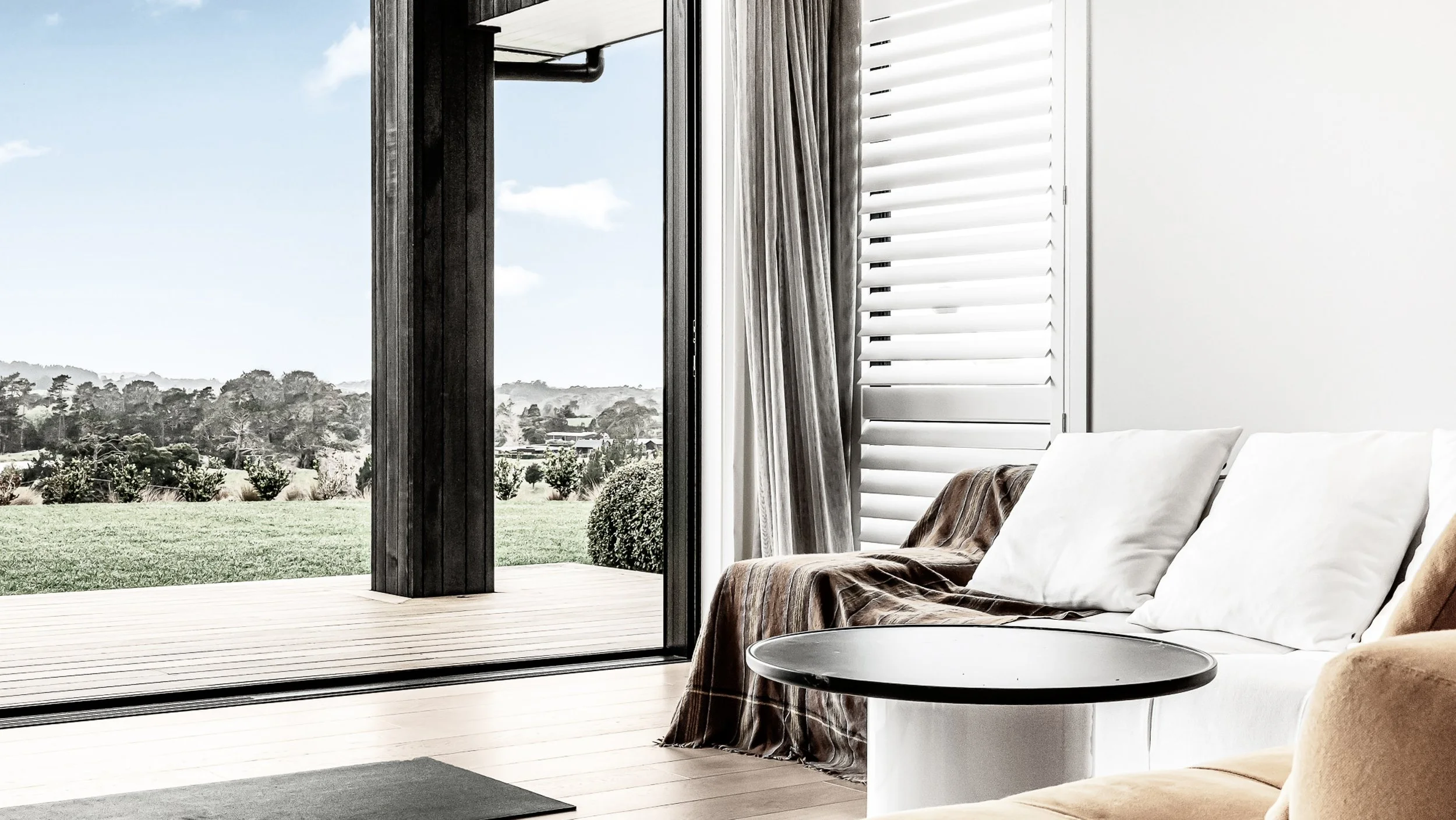
A completed Maddren Homes lifestyle home, designed to connect the living spaces with the surrounding rural landscape.”
Don't force a house onto the section
One of the greatest advantages of Design & Build is the ability to create a home specifically for its site.
Rather than selecting a standard plan and trying to make the land accommodate it, the architecture can respond to the natural characteristics of the property.
A well-considered home might follow the contours rather than fighting them, position living areas to capture sunlight and outlook, create sheltered outdoor spaces or use the shape of the site to establish privacy between different areas of the home.
At Maddren Homes, we believe the land and the home should be considered together from the beginning. Understanding both gives the design team much more opportunity to create something that feels genuinely connected to its surroundings.
Can a builder assess land before you buy it?
Yes — Maddren Homes can help assess a site from a Design & Build perspective before you commit to purchasing the land.
At Maddren Homes, we often talk with clients who have found a piece of land they love but aren't yet sure what it could mean for their future home.
Our Design & Build team can look at the site with the proposed home in mind. Depending on the property and the information available, this may involve considering the contours and building platform, access, services, likely earthworks or retaining requirements, orientation, views, privacy and other site-specific opportunities or constraints.
Where specialist advice or further investigation is required, this can also be identified early.
The aim isn't to replace legal, planning, geotechnical or other specialist due diligence. It's to bring a builder's perspective into the conversation before important decisions have already been made.
Why assess the land before designing the house?
For a bespoke home, the land isn't simply somewhere to place the building. It is part of the design brief.
A site assessment can help the homeowner and design team understand where the home could sit, how vehicles and people will approach it, where outdoor spaces might work best, what views should be captured and where privacy or shelter may be needed.
It can also highlight construction considerations that may influence the design.
From our experience designing and building homes across Auckland, understanding these factors early creates a much stronger starting point. Instead of designing the home first and resolving the land afterwards, both can be considered together.
Lifestyle land can create incredible opportunities
Lifestyle properties often give homeowners opportunities that are difficult to achieve on smaller suburban sections.
There may be room to create different wings or pavilions, generous outdoor living, additional garaging, a pool, extensive landscaping or simply greater separation from neighbouring homes.
But more land also means more decisions.
Where should the house sit? Which direction should the main living spaces face? How should you approach the home? Where should outdoor areas be positioned? What parts of the property should remain open?
These decisions are where thoughtful site planning becomes just as important as the architecture itself.
A successful lifestyle home shouldn't simply occupy the land. It should feel as though it belongs there.
Find it. Assess it. Build it with Maddren.
Finding the land is only the beginning.
Before you commit, understanding the relationship between the site and the home you want to create can help you make a much more informed decision.
At Maddren Homes, our Design & Build team can work with you from the early stages — assessing the opportunity, understanding the site, developing the design and carrying it through into construction.
Because the best time to understand your land is before the home has been designed around assumptions that may not be right.
Common questions about buying land to build on
What should I check before buying a section in Auckland?
Important considerations can include contours, ground conditions, access, services, easements, covenants, orientation and the planning requirements that apply to the property. You should also consider whether the site is suitable for the type of home and lifestyle you want to create. Legal and appropriate specialist due diligence should be completed before purchasing.
Should I talk to a builder before buying land?
If you're buying land with the intention of building a new home, involving a builder before you commit can be useful. A builder can look at the property from a construction and Design & Build perspective and help identify site considerations that may influence the home you are planning.
Is sloping land more difficult to build on?
Sloping land can require additional consideration around foundations, retaining, earthworks, drainage and access, but it can also create excellent architectural opportunities. The important thing is understanding the site and designing the home appropriately for its conditions.
Can I use an existing house plan on any section?
Not every house plan will work equally well on every piece of land. Orientation, contours, access, views, privacy, planning requirements and the available building area can all influence whether a particular design is appropriate. For a bespoke home, designing around the characteristics of the site can create a much better result.
Found land you're considering?
Before you commit, talk to the Maddren Homes team. We can help you look at the land from a Design & Build perspective and explore how your ideas could work with the site.

A lifestyle home designed to feel naturally connected to its rural Auckland setting.